Volumetric weight calculator
Enter your packed box size and actual weight to see the weight your courier will charge for.
- Volumetric weight
- –
- Actual weight
- –
- Higher of the two
- –
- Chargeable weight
- –
Show the working
Courier divisors last verified 25 Oct 2026 from Delhivery and Shiprocket.
Ever had a courier charge you for more weight than your parcel actually weighs? That’s volumetric weight. Couriers charge for how much space your box takes in the truck, not just how heavy it is. Put your box size and weight into the calculator above and it tells you the weight you’ll be billed for. If your box is too big, it also tells you how much smaller it needs to be.
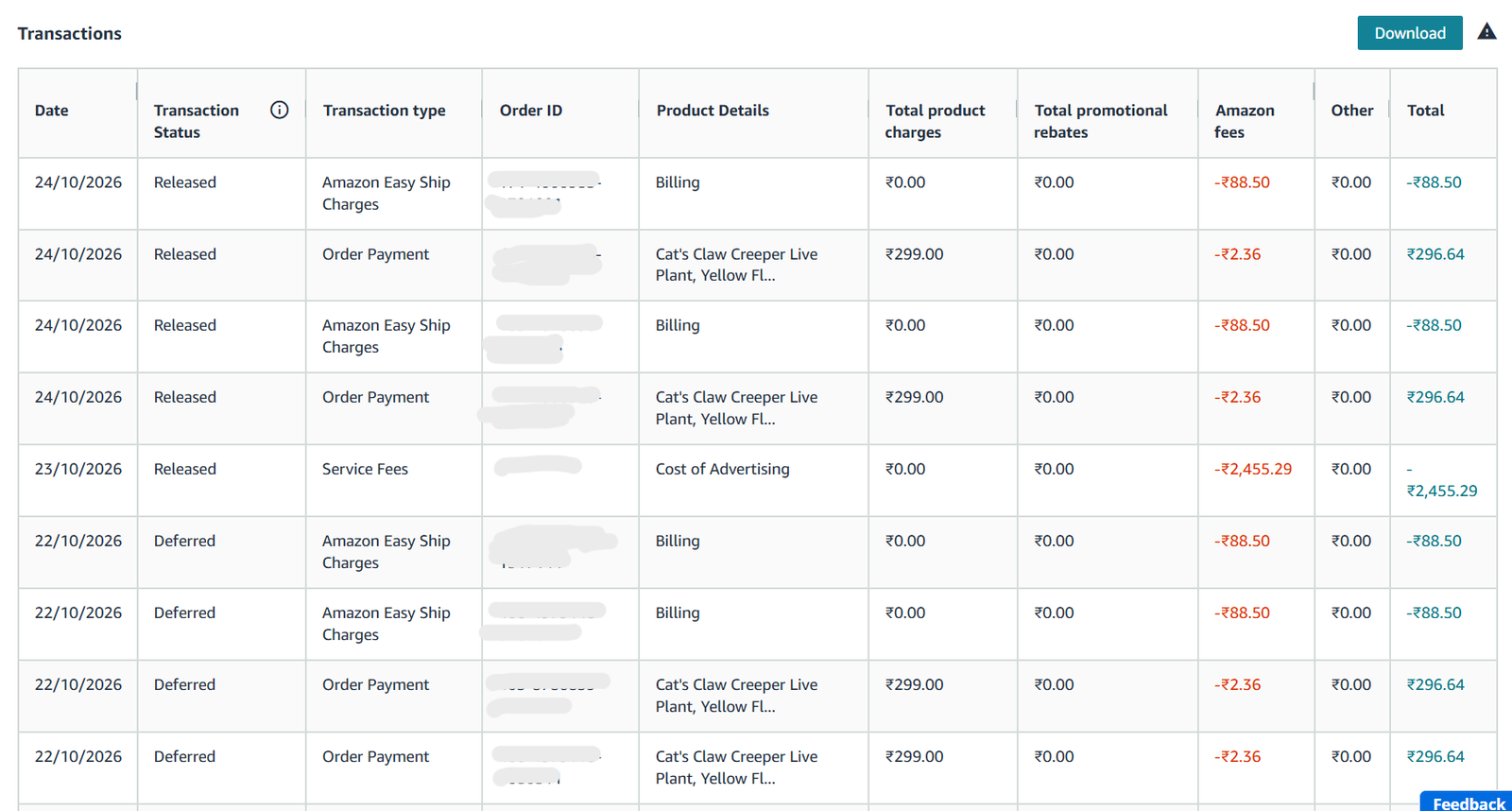
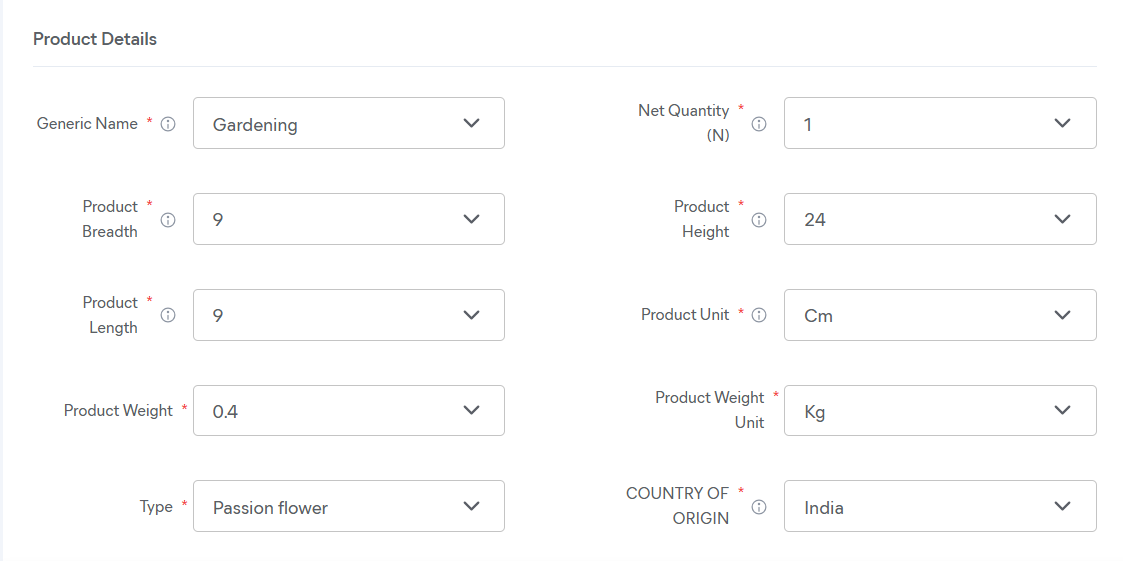
I sell live plants on Amazon and Meesho, things like the Cat’s Claw Creeper and the Passion Flower. A packed plant weighs about 400 g, and I list it at 9 × 9 × 24 cm. That box comes to 0.39 kg of volumetric weight, so I stay in the cheapest 500 g slab. When you sell a plant for ₹299, that slab matters a lot. Amazon takes ₹88.50 for shipping on every one of my orders, which is almost a third of the price.
How volumetric weight is calculated
For a box measured in centimetres, most Indian couriers use:
Volumetric weight (kg) = Length × Breadth × Height (cm) ÷ 5000
The courier then compares this with the actual (dead) weight and charges for whichever is higher:
Chargeable weight = higher of (actual weight, volumetric weight)
That number is then rounded up to the courier’s billing slab, which is usually 0.5 kg for most e-commerce shipments.
Two details catch sellers out:
- Each side is rounded up to the next whole centimetre before multiplying. A side measured at 20.2 cm counts as 21 cm. Shiprocket’s help page says to round sides up this way.
- The weight is rounded up, not to the nearest slab. A parcel at 0.51 kg is billed as 1 kg in 0.5 kg slabs.
Divisors used by Indian couriers
| Courier or service | Divisor (cm) | Source |
|---|---|---|
| Delhivery (Surface and Express) | 5000 | Delhivery help |
| Shiprocket (default) | 5000 | Shiprocket support |
| Aramex (via Shiprocket) | 6000 | Shiprocket support |
| FedEx Surface services (via Shiprocket) | 4500 | Shiprocket support |
A smaller divisor means a higher volumetric weight, so 4500 is the most expensive for light, bulky parcels.
Delhivery notes one exception: flyer (polybag) shipments up to 1 kg are charged on dead weight only.
What I see in my own seller panels
- Amazon Easy Ship: shipping shows as its own “Amazon Easy Ship Charges” line under Payments, then Transactions. For my 400 g plant it’s ₹88.50 per order, which is ₹75 plus 18% GST.
- Meesho: every listing asks for the packed length, breadth, height and weight. Fill these in from the packed parcel, not the bare product.
- Whichever platform you sell on, enter the size of the packed parcel. That’s what the courier measures.
Worked example
You sell a cotton kurti that weighs 0.8 kg packed, and you ship it in a 30 × 20 × 10 cm box.
- Volume: 30 × 20 × 10 = 6,000 cubic cm
- Volumetric weight: 6,000 ÷ 5,000 = 1.2 kg
- Higher of 0.8 kg and 1.2 kg = 1.2 kg
- Rounded up to the 0.5 kg slab = 1.5 kg billed
The same kurti in a 30 × 20 × 8 cm box gives 4,800 ÷ 5,000 = 0.96 kg, billed as 1 kg. Two centimetres of height saves you one 0.5 kg slab on every order.
Now with my own plant: in its 9 × 9 × 24 cm box it’s billed on the 0.4 kg actual weight, because that’s a little more than the 0.39 kg volumetric weight. Both are under 500 g, so I pay the lowest Easy Ship charge of ₹88.50. Now say I packed the same plant in a roomier 12 × 12 × 26 cm box. The volumetric weight would be 0.75 kg, and I’d be billed for 1 kg instead. Same plant, same weight, a bigger bill. Tap “Live plant (my box)” in the calculator and change the size to see it yourself.
When the box size costs you money, and when it doesn’t
Volumetric weight only matters when it pushes you into a higher slab. A 0.55 kg parcel with a volumetric weight of 0.6 kg is billed as 1 kg either way. The calculator tells you which case you’re in.
It matters most for light, bulky products: clothing, soft toys, pillows, lampshades and empty-looking gift boxes. Heavy, compact items like books, cast iron or bottles are almost always billed on dead weight.
Ways to bring volumetric weight down
- Use a polybag or flyer instead of a box for clothing and soft goods that can’t break.
- Keep two or three box sizes in stock instead of one large size for everything.
- Fold or vacuum-pack textiles before packing.
- Measure the packed parcel, not the empty box. Bulging tape and fillers add centimetres.
- Declare the correct dimensions. Under-declaring leads to weight discrepancy charges later.
If you ship plants, keep the box snug around the pot and the stem rather than using a roomy carton. A few extra centimetres on every side is all it takes to jump a slab.
Frequently asked questions
What is the volumetric weight of a 30 × 30 × 30 cm box?
27,000 ÷ 5,000 = 5.4 kg, billed as 5.5 kg in 0.5 kg slabs.
My dimensions are in inches. What do I do?
Choose “Inches” in the calculator. It converts to centimetres (1 inch = 2.54 cm) and then rounds each side up to the next whole cm.
Why is my weight discrepancy charge higher than what I declared?
The courier measured the parcel at its hub and found a higher volumetric or dead weight than you entered. Re-measure the packed parcel, and keep photos of the parcel on a scale with a tape measure as evidence for disputes.
Do polybag shipments have volumetric weight?
Delhivery charges flyer shipments up to 1 kg on dead weight only. Check your courier’s own rules for heavier flyers.
More tools for online sellers
- E-commerce TCS and TDS calculator: see the tax your marketplace holds back from each payout
Sources
- Delhivery: Calculating volumetric weight
- Shiprocket: How to calculate the volumetric weight of my shipment
Last verified: 25 October 2026. Courier rules change. If you spot a difference, tell us through the Contact page.
Written by Adhil, who sells live plants on Amazon, Meesho and Flipkart.